
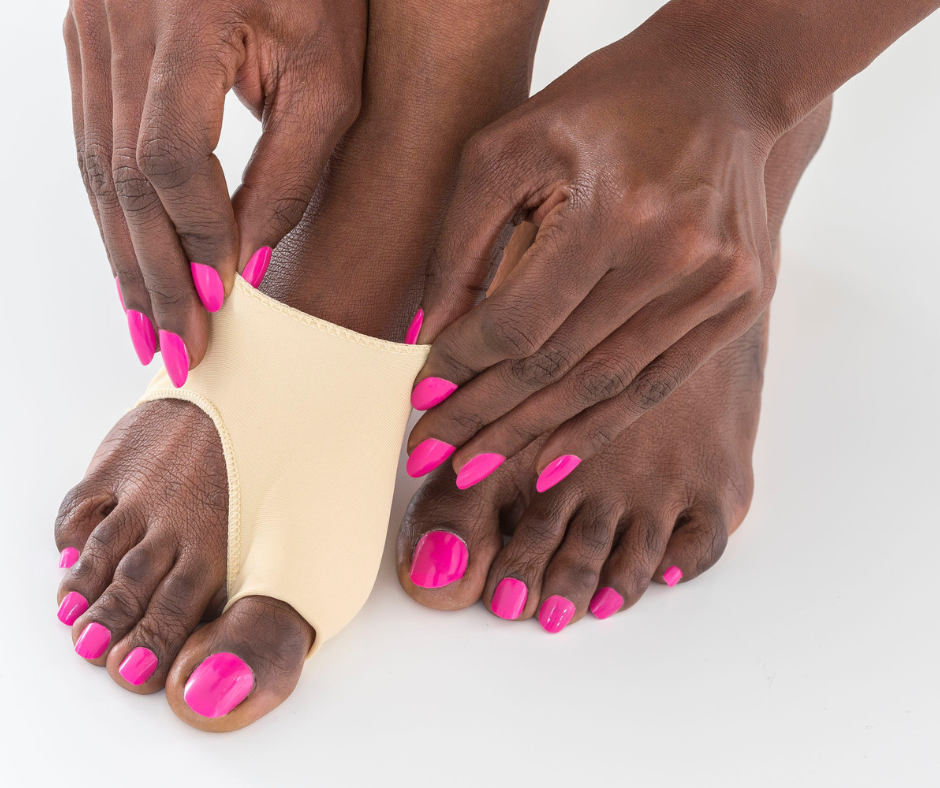
Many assume that a bunion is just a bony growth or bump, a problem that only affects women who wear narrow high heels. The reality is a little more complicated.
Whether or not you have bunions is a question of genetics, and contrary to popular belief, the problem goes beyond the bony bump itself. Learn how to handle bunions and get back to moving pain-free.
Why and How Bunions Develop
Bunions can happen to everyone–active adults, teenagers, or children can notice a painful bump that forms on the side of the big toe.
“I’m not the ‘type’ to get a bunion. How did this happen?”
Let’s clear up some misconceptions:
- A bunion (Hallux Valgus) does not discriminate by age.
- A bunion is not a “growth” of extra bone; it is a dislocated joint.
- You didn’t get a bunion just because you wore bad shoes once. You got a bunion because you inherited a specific foot structure.
If you inherited flat feet, loose ligaments, or a hypermobile arch from your parents, your foot could be unstable. When you walk, this instability allows the long bone of your foot (the first metatarsal) to drift outward, while your big toe leans inward.
That “bump” you see is the head of your own bone sticking out of alignment.
Shoes Can Make It Worse
While shoes do not create genetic instability, they can make the existing issue worse.
- When you take a foot that is already prone to drifting and squeeze it into a narrow toe box (like a stiletto, a dress shoe, or a soccer cleat), you accelerate the deformity.
- The shoe forcefully bends the big toe toward the second toe, worsening the angle and inflaming the joint capsule.
Stopping the “Drift” Without Surgery
Bunions are progressive and will get larger and more painful over time without proper treatment and stabilization.
While only surgery can physically move the bone back into perfect alignment, we can stop the progression and manage the pain conservatively.
- The “Scaffold” Solution: Since the root cause is mechanical instability, we prescribe custom orthotics. These medical devices act as a scaffold for your arch.
- By correcting your overpronation, we remove the pressure that is forcing the big toe joint out of place.
- Footwear Audits: We help you find shoes with a naturally wide toe box that accommodate your foot without sacrificing your active lifestyle.
- Padding and Spacers: Strategic offloading can prevent the painful friction and corns that develop over the bump.
When Is It Time for Surgery?
We typically only recommend surgical correction when conservative options fail, when the pain dictates your daily life, or when the big toe begins to physically cross over your second toe.
Don’t wait until surgery is your only option. No matter your age, if you notice your toe starting to drift, contact our office today. Southern Maryland Foot & Ankle emphasizes education, working together with patients to choose the best approach for treatment. We offer proven, up-to-date care in a welcoming and supportive environment. Call us today to schedule your next appointment!